UPAL Session 1 – Theme: “Learning, Teaching, and
Creativity”
Anticipatory Nugget:
Background:
Essential Points
- Our Goal is NOT just Creativity, but Creativity as Part of Goal Oriented, Professional Activity!
Creativity goes beyond the act of creation; it involves REFLECTION directed at understanding
both the creative experience and the item created!
- Our goal is NOT just Creativity, but MEANINGFUL CREATIVITY, which requires that the Creator engage in Accountable Talk! Accountable to the Community, Accountable to Accurate Knowledge, Accountable to Rigorous Thinking in which he creates and to whose creative efforts he contributes.
Varieties of Creative Activity
- Collaborative
- Process Oriented
- Purposeful
- Contextualized
I) Discussion
Anticipatory Nugget:
More, Better, Different
Assertion (to be discussed - please feel free to push back): - We are now in what many call the Innovation Age, a period of time in which making things better won't be satisfied by merely doing what we are currently doing, but doing more of it or doing it better than we've been doing it... The need NOW is to do things differently and Education must develop individuals who understand how to do DIFFERENT well!
Assertion (to be discussed - please feel free to push back): - We are now in what many call the Innovation Age, a period of time in which making things better won't be satisfied by merely doing what we are currently doing, but doing more of it or doing it better than we've been doing it... The need NOW is to do things differently and Education must develop individuals who understand how to do DIFFERENT well!
The series of activities we'll be engaged in is directed at establishing (seeing) a direct connection between the Arts
(as a doorway into Creativity) and Creativity in one’s role as an educational
leader!
and
and
Establishing (seeing) a direct connection between the Arts
(as a doorway into Creativity) and Creativity in one’s role as a citizen of
worl... a Learner!
One aspect of the process underlying our activities is Design thinking, an observable, highly understandable path to drawing a connection between the phenomenon/act of creativity
and purpose driven, applied creation.
Background:
Essential Points
- Our Goal is NOT just Creativity, but Creativity as Part of Goal Oriented, Professional Activity!
Creativity goes beyond the act of creation; it involves REFLECTION directed at understanding
both the creative experience and the item created!
- Our goal is NOT just Creativity, but MEANINGFUL CREATIVITY, which requires that the Creator engage in Accountable Talk! Accountable to the Community, Accountable to Accurate Knowledge, Accountable to Rigorous Thinking in which he creates and to whose creative efforts he contributes.
Varieties of Creative Activity
- Collaborative
- Process Oriented
- Purposeful
- Contextualized
I) Discussion
-
State of Creativity in Our Schools
-
Need for Schools to develop their students’
creativity
-
Approaches to developing Student Creativity
-
Leading a School as a Creative Community
II) Making a Work of
Art (activity)
*Be sure you are familiar with and understand all phases and aspects of the assignment before beginning.
Challenge
- Students will be broken up into groups of 4 (or close to that number)
each group member will assume a group process role: documentarian, group leader (directs the group, keeps It on target and marching together towards its goal), reporter/spokesperson, art director ( ), time keeper
- The group will create a mixed media piece that:
a) communicates and informs others about the group members understandings and message to others
b) functions as a work of Art (visually engaging /pleasing and thus facilitates the communication embedded in the work)
*Be sure you are familiar with and understand all phases and aspects of the assignment before beginning.
Challenge
- Students will be broken up into groups of 4 (or close to that number)
each group member will assume a group process role: documentarian, group leader (directs the group, keeps It on target and marching together towards its goal), reporter/spokesperson, art director ( ), time keeper
- The group will create a mixed media piece that:
a) communicates and informs others about the group members understandings and message to others
b) functions as a work of Art (visually engaging /pleasing and thus facilitates the communication embedded in the work)
Focus Product: Art
Work Parameters and Instructions
A) 1st Phase
A) 1st Phase
- Each student is to choose 1 prompt from list provided (or
create you own, instead), Choose the prompt you feel best relates to and
expresses something important about the day’s them of Fostering Student
Creativity (students will be asked to
explain that choice later)
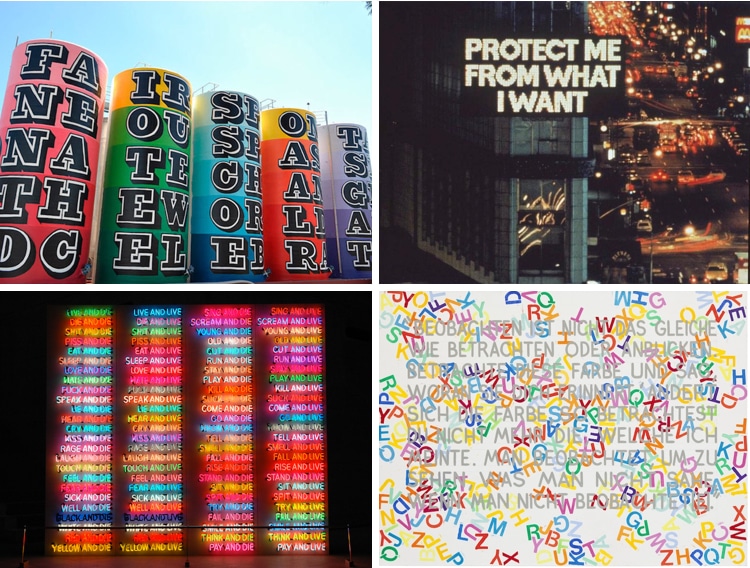
- The prompt will represent the visual focus (theme) portrayed in a square, modular piece of paper
In other words, each student is to work on a piece of Visual Art that is both text and design…
- The group may add 1 ‘wild card’ square that features another prompt
- Each square is to be worked to satisfaction, the end result being that the prompt text is communicated and forms the basis of visual interest
OK, I understand the above but “WHAT DO I DO?”
Further directions and suggestions:
Your goal is to turn the chosen word (prompt) into a work of art that will get others to: pay attention to it, focus on it, reflect on it, (perhaps ‘take it in’ in some way you want – or perhaps ‘move’ them to take it in, in some personally affected way), remember it, see it and consider it as they never have before, value it, love it, sing it… etc. etc. etc.
- Put your ‘word’ prompt onto your ‘canvas’ (paper), choose how large (or small) you want it to be, where on the paper should it sit?, at what angle should it sit? should it fill the paper? Should there be space around it? Should it be ‘drawn’ there once or many times?
- Will you ‘free hand” the word? Use a straight edge to help you guide your initial lines? Trace the word? Collage it (cut it from a source and ‘paste’ it one your paper)? Other
- Will you focus on the word itself, or will you focus on the area surrounding it? Or both?
- Will your representation of the word be active or restful or have areas of both extremes?
- Will you use black, color(s), just lines or just shapes or both? Will you add patterns and textures? Will your design be light or dark or have areas of both?
- Will you produce something messy or neat.. and who’s to say which is which?
- Will you come up with something to do that Gura hasn’t thought of?
Next be sure to take a good look (a the bottom) at Understandings and Suggestions about how to make an effective work of art and reflect on it!
B) 2nd Phase
- The prompt will represent the visual focus (theme) portrayed in a square, modular piece of paper
In other words, each student is to work on a piece of Visual Art that is both text and design…
- The group may add 1 ‘wild card’ square that features another prompt
- Each square is to be worked to satisfaction, the end result being that the prompt text is communicated and forms the basis of visual interest
OK, I understand the above but “WHAT DO I DO?”
Further directions and suggestions:
Your goal is to turn the chosen word (prompt) into a work of art that will get others to: pay attention to it, focus on it, reflect on it, (perhaps ‘take it in’ in some way you want – or perhaps ‘move’ them to take it in, in some personally affected way), remember it, see it and consider it as they never have before, value it, love it, sing it… etc. etc. etc.
- Put your ‘word’ prompt onto your ‘canvas’ (paper), choose how large (or small) you want it to be, where on the paper should it sit?, at what angle should it sit? should it fill the paper? Should there be space around it? Should it be ‘drawn’ there once or many times?
- Will you ‘free hand” the word? Use a straight edge to help you guide your initial lines? Trace the word? Collage it (cut it from a source and ‘paste’ it one your paper)? Other
- Will you focus on the word itself, or will you focus on the area surrounding it? Or both?
- Will your representation of the word be active or restful or have areas of both extremes?
- Will you use black, color(s), just lines or just shapes or both? Will you add patterns and textures? Will your design be light or dark or have areas of both?
- Will you produce something messy or neat.. and who’s to say which is which?
- Will you come up with something to do that Gura hasn’t thought of?
Next be sure to take a good look (a the bottom) at Understandings and Suggestions about how to make an effective work of art and reflect on it!
B) 2nd Phase
Groups are to come up with 3 different solutions to arranging the individual
squares in a ‘group whole’ work of art. Use CELL Phone to Photograph each
Groups are to select the one arrangement that they feel best
satisfies the challenge.
Text Assignment:
a) Identify your ‘square’ by describing it
b) Why did you choose the prompt you did?
c) thinking about your experience today , what is 1 thing you want principals to understand about Student Creativity and how to foster, nourish, develop it?
d) Through the experience of today’s session, what have you learned about creativity for which you see a connection to the work of a school principal? Explain this in a sentence or 2 (or more).
a) Identify your ‘square’ by describing it
b) Why did you choose the prompt you did?
c) thinking about your experience today , what is 1 thing you want principals to understand about Student Creativity and how to foster, nourish, develop it?
d) Through the experience of today’s session, what have you learned about creativity for which you see a connection to the work of a school principal? Explain this in a sentence or 2 (or more).
C) 3rd
Phase
All 3 solutions are to be uploaded to the Creativity and School Leadership Blog along with the text messages.
>>>>>>>>>>>>>>>>>>>>>>>>>>>>>>>>>>>>>>>>>>>>>>>>>>>>>>>>>>>>>>>>>>>>>>>>>>>>>>>>>
UPAL Session 2 “Leadership and Vision: Establishing the School as a Creative Community)
Essential Questions:
- Where in the school’s instructional program does Student Creativity fit in?
- What about the school’s culture is important to establish? change? develop in order for creativity to flourish in the school?
- What would happen in the greater (whole) school community that would supplement the creativity fostering work in the individual classes/classrooms?
All 3 solutions are to be uploaded to the Creativity and School Leadership Blog along with the text messages.
>>>>>>>>>>>>>>>>>>>>>>>>>>>>>>>>>>>>>>>>>>>>>>>>>>>>>>>>>>>>>>>>>>>>>>>>>>>>>>>>>
UPAL Session 2 “Leadership and Vision: Establishing the School as a Creative Community)
Essential Questions:
- Where in the school’s instructional program does Student Creativity fit in?
- What about the school’s culture is important to establish? change? develop in order for creativity to flourish in the school?
- What would happen in the greater (whole) school community that would supplement the creativity fostering work in the individual classes/classrooms?
Instructions
-
Select
-
The group will mix today’s ‘responses’ to
prompts (from list #2) with the ‘finished’ work from the previous session to
create a new and more expansive work that embraces the first work and
recontextualizes it into a new message.
>>>>>>>>>>>>>>>>>>>>>>>>>>>>>>>>>>>>>>>>>>>>>>>>>>>>>>>>>>>>>>>>>>>>>>>>>>>>>>>>>>
UPAL Session 3 “The Change Agent as Story Teller”
>>>>>>>>>>>>>>>>>>>>>>>>>>>>>>>>>>>>>>>>>>>>>>>>>>>>>>>>>>>>>>>>>>>>>>>
>>>>>>>>>>>>>>>>>>>>>>>>>>>>>>>>>>>>>>>>>>>>>>>>>>>>>>>>>>>>>>>>>>>>>>>
Understandings and
Suggestions about how to make an effective work of art.
Phase 1 / First steps, uncommitted experiments,
- Experimental - involving non-committed , tentative “searching” first efforts
Use Thumbnails or Practice pieces…
- Leave yourself backdoors, ways to change direction,
- Mistakes are part of the process. They inform us about what we don’t want, which guides us in finding what we don’t want
- Include mistakes as part of the background as you experiment
- Do NOT start over! Honor your mistakes and use them!
Phase 2 / Committed Refinement
- At a certain point you will have a good idea of where you might be going: acknowledge that!
When you come to that point, then: Commit to size! Commit to Placement!
At all times:
- Work from light to dark! Work from large (strokes, sections, movements, etc.) to small, contemplates next steps before committing to the step you are about to take.
- From time to time stop and ask yourself, “what is the least forward straggler in this piece?” (in other words, which part, aspect, element is the weakest) and make that your focus of work for a while… and then turn your attention to the next least forward straggler…
- Art works - successful ones, ones that are visually powerful and communicatively successful often have 3 identifiable areas of focus… Primary (where one’s attention goes to immediately and most strongly), Secondary, and Tertiary . Is your work turning out to conform to this? Is there some way you can nudge it in that direction?
Phase 1 / First steps, uncommitted experiments,
- Experimental - involving non-committed , tentative “searching” first efforts
Use Thumbnails or Practice pieces…
- Leave yourself backdoors, ways to change direction,
- Mistakes are part of the process. They inform us about what we don’t want, which guides us in finding what we don’t want
- Include mistakes as part of the background as you experiment
- Do NOT start over! Honor your mistakes and use them!
Phase 2 / Committed Refinement
- At a certain point you will have a good idea of where you might be going: acknowledge that!
When you come to that point, then: Commit to size! Commit to Placement!
At all times:
- Work from light to dark! Work from large (strokes, sections, movements, etc.) to small, contemplates next steps before committing to the step you are about to take.
- From time to time stop and ask yourself, “what is the least forward straggler in this piece?” (in other words, which part, aspect, element is the weakest) and make that your focus of work for a while… and then turn your attention to the next least forward straggler…
- Art works - successful ones, ones that are visually powerful and communicatively successful often have 3 identifiable areas of focus… Primary (where one’s attention goes to immediately and most strongly), Secondary, and Tertiary . Is your work turning out to conform to this? Is there some way you can nudge it in that direction?